
What Actually Happens During a Comprehensive Eye Exam
A comprehensive eye exam is a detailed evaluation of your vision, eye function, and overall eye health. It goes far beyond reading letters on a chart: your eye doctor looks at how clearly you see, how your eyes work together, and whether there are early signs of conditions that may not cause symptoms right away. If you are a new patient, knowing the flow of the visit can make the experience feel less mysterious and help you get more value from your appointment.

What is a comprehensive eye exam?
A comprehensive eye exam is a full eye checkup that combines vision testing with an eye health assessment. In practical terms, it helps answer two questions at the same visit: “How well am I seeing?” and “Are my eyes healthy?” A comprehensive dilated eye exam may include vision measurements, refraction, eye pressure testing, pupil checks, eye movement testing, and a close look at the front and back of the eye, including the retina and optic nerve. (nei.nih.gov)
That is why people searching “what is a comprehensive eye exam,” “whats a comprehensive eye exam,” or “what does a comprehensive eye exam include” are usually asking more than one thing. They want to know whether the visit will update their glasses prescription, whether it will be uncomfortable, whether dilation is involved, and whether the exam can find problems before vision changes are obvious. The answer is often yes, but the exact testing depends on your age, symptoms, medical history, current lenses, and the doctor’s findings.
Think of a thorough eye examination as a baseline for your vision health. Even if you feel you see well, the exam gives your provider a closer look at structures that cannot be checked with a simple screening. It can also help explain everyday issues such as blurry vision, eye strain, headaches, glare at night, trouble focusing, or discomfort with digital screens.
The visit starts with your history and concerns
Before any instruments are used, your exam usually begins with a conversation. This part may feel simple, but it guides the rest of the visit. Your eye doctor or technician may ask about your main concern, your current glasses or contacts, medications, allergies, past eye injuries or surgeries, family eye history, and health conditions such as diabetes or high blood pressure.
For new patients, this is the moment to be specific. “My vision seems blurry” is helpful, but “my right eye gets blurry after two hours of computer work” is even better. Mention symptoms such as flashes, floaters, eye pain, double vision, dryness, headaches, halos around lights, or sudden changes in vision. Also bring up practical goals, such as driving at night more comfortably, reading without fatigue, or finding out whether contact lenses are an option.
A good history also helps your doctor decide whether you need extra testing. For example, a patient with diabetes may need careful retinal evaluation because diabetic eye disease can develop before vision loss is noticed. The CDC recommends that people with diabetes get regular dilated eye exams so problems can be spotted early. (cdc.gov)
What happens during the main vision tests
The vision portion of a comprehensive vision check measures clarity, focus, and how your eyes function together. These tests are usually painless and familiar, although some equipment may be new if it has been a while since your last exam.
Visual acuity checks how clearly you see
Visual acuity is the classic “read the smallest line you can” test. You may look at a wall chart, digital screen, or near-reading card while each eye is tested separately and then sometimes together. This helps measure how clearly each eye sees at distance and, when needed, up close.
This test does not explain everything by itself. A person can read a chart well and still have eye pressure, retinal changes, focusing problems, or early disease that needs attention. That is one reason a comprehensive eye exam vs a basic screening is such an important distinction.
Refraction fine-tunes your prescription
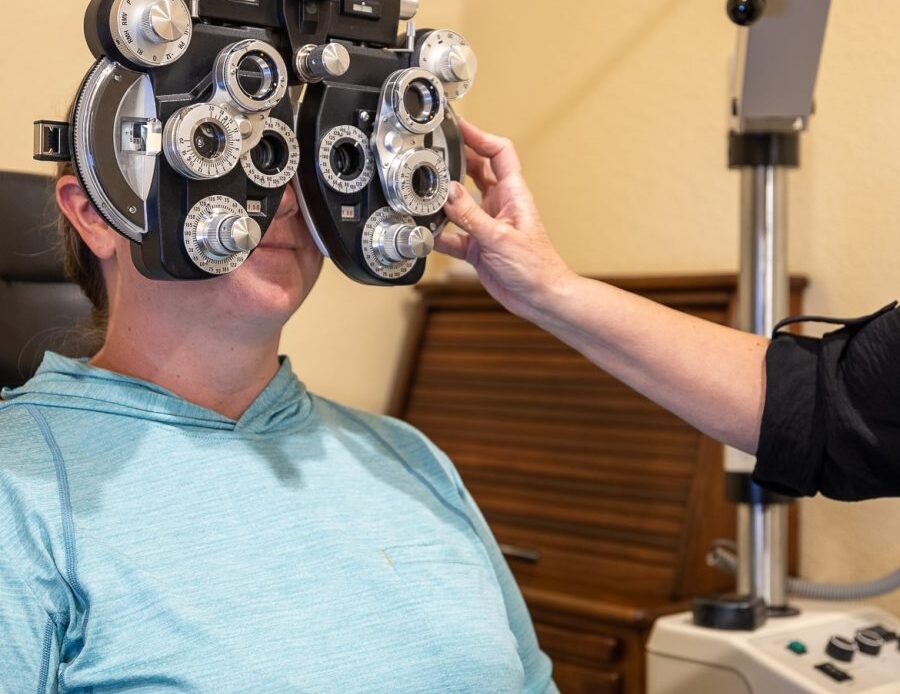
Refraction is the part of the eye exam comprehensive process where your provider determines whether lenses can make your vision clearer. You may look through a phoropter, the instrument with many lens choices, while the doctor asks, “Which is clearer, one or two?” Some offices also use an autorefractor or retinoscope to estimate the starting point for your prescription. (aoa.org)
This test checks for nearsightedness, farsightedness, astigmatism, and age-related near focusing changes. If you already wear glasses, bring them to the appointment. Comparing your current prescription with new measurements helps your doctor understand whether your vision has changed and whether an update is likely to help.
Eye teaming and movement tests look at comfort, not just clarity
Seeing clearly is not only about lens power. Your eyes also need to aim, move, and work together comfortably. Eye movement testing may involve following a light or target while your doctor watches how the eyes track. Binocular vision checks can help identify eye alignment or teaming issues that may contribute to strain, double vision, headaches, or reading fatigue.
These tests are especially useful when symptoms appear during close work, screen use, school tasks, or long periods of concentration. A person may technically see 20/20 but still feel uncomfortable because the eyes are working too hard to maintain focus or alignment.
What does a comprehensive eye exam include?
A comprehensive eye exam typically includes a series of tests that evaluate both vision and the physical health of the eye. The exact order varies by office, but the goal is consistent: to check the front of the eye, the internal structures, eye pressure, side vision, and the retina in enough detail to guide care. (nei.nih.gov)
Common parts of a vision health exam may include:
- Medical and vision history: Your symptoms, medications, family history, past eye care, and current glasses or contact lens use.
- Visual acuity: How clearly each eye sees at distance and sometimes near.
- Refraction: The lens testing used to determine an eyeglass prescription.
- Pupil testing: How your pupils react to light, which can give clues about nerve function.
- Eye movement and alignment testing: How well your eyes move and work together.
- Peripheral vision screening: A check of side vision, sometimes with a simple confrontation test and sometimes with automated visual field testing.
- Color vision testing: Often used when color perception is a concern or when occupational, medical, or neurological factors make it relevant.
- Slit-lamp examination: A magnified view of the eyelids, cornea, iris, lens, and other front-eye structures.
- Tonometry: Measurement of eye pressure, which is one part of glaucoma risk assessment.
- Retinal evaluation: A view of the retina, optic nerve, macula, and blood vessels, often after dilation.
- Additional imaging when needed: Tests such as retinal photography or optical coherence tomography may be used to document or further evaluate findings.
Not every patient needs every advanced test at every visit. Your doctor may add or skip certain steps depending on your symptoms, risk factors, age, diagnosis, insurance coverage, or the reason for the visit. The important point is that a full eye checkup is designed to look for more than a glasses prescription.
The eye health assessment looks at structures you cannot see yourself
Many patients are surprised by how much of a comprehensive eye exam focuses on eye health rather than lens choices. During a slit-lamp exam, the doctor uses a microscope and a narrow beam of light to evaluate the front of the eye. This can help assess dryness, inflammation, corneal changes, cataracts, eyelid issues, and other findings that may affect comfort or vision.
Tonometry measures intraocular pressure. The “air puff” test is one version, but many offices use other instruments that touch the eye gently after numbing drops or use a small rebound device. Eye pressure alone does not diagnose glaucoma, but it is an important piece of the overall evaluation, along with the optic nerve appearance, visual field testing when indicated, and other clinical findings. (nei.nih.gov)
Your doctor may also check the pupils and optic nerve because the eye is closely connected to the nervous system. Sometimes the eyes show signs that deserve medical follow-up even when your vision seems stable. That does not mean every exam uncovers a serious issue, but it does explain one of the major eye exam benefits: early awareness.
Dilation gives your doctor a wider view
During a comprehensive dilated eye exam, drops are placed in your eyes to widen the pupils. This helps your doctor see more of the retina, optic nerve, macula, and blood vessels at the back of the eye. The National Eye Institute describes dilation, visual field testing, visual acuity, and tonometry as common parts of a dilated eye exam. (nei.nih.gov)
Dilation is not usually painful, although the drops may sting briefly. Once your pupils are larger, bright light may feel more intense and near vision may be blurry for a few hours. Bring sunglasses, and if you know you are sensitive to dilation or have a long drive afterward, consider arranging transportation.
The reason dilation matters is simple: a small pupil limits the view. With a wider view, your doctor can better evaluate the retina and optic nerve for changes linked with conditions such as diabetic retinopathy, macular degeneration, retinal tears, and glaucoma. In some cases, retinal imaging can supplement the view, but your provider will explain whether imaging replaces or adds to dilation in your situation.
A comprehensive exam is different from a basic vision screening
A basic vision screening is usually a quick check for obvious vision problems. It may identify that you need a complete exam, but it is not the same as a thorough eye examination by an eye care professional. A comprehensive eye exam evaluates visual clarity, prescription needs, eye function, eye pressure, and internal eye health in a much more complete way. (aoa.org)
This distinction matters because some eye diseases do not cause early symptoms. You can pass a simple screening and still need a closer look at your retina, optic nerve, cornea, or eye pressure. Screenings can be useful in schools, workplaces, primary care settings, and community events, but they are best understood as a starting point, not a replacement for a full exam.
If you are comparing a routine eye check to an exam comprehensive enough to guide ongoing care, ask what is actually included. Will the visit include refraction? Eye pressure measurement? Retinal evaluation? Dilation if needed? A clear answer helps you understand what kind of appointment you are scheduling and what information you will leave with.
Comprehensive eye exam vs eye exam with contact lenses
The phrase “comprehensive eye exam vs eye exam with contact lenses” can be confusing because these are related, but not identical, services. A comprehensive eye exam evaluates eye health and vision. A contact lens evaluation adds lens-specific measurements and fitting decisions because contacts sit directly on the eye.
If you wear or want contact lenses, your provider may assess corneal curvature, tear film quality, lens movement, lens comfort, and how your eyes respond to trial lenses. Contact lens prescriptions include details that are not part of a standard eyeglass prescription, such as lens brand, base curve, diameter, and material. The doctor also needs to make sure the lenses provide clear vision without irritating the cornea or increasing avoidable risk.
In other words, you may need both. The comprehensive exam checks the health and visual system. The contact lens portion determines whether a specific lens is safe, comfortable, and effective for your eyes. If you are a new patient, mention your contact lens goals when scheduling so the office can reserve the right appointment type and explain what to bring.
How new patients can prepare for the visit
A little preparation makes the appointment smoother and helps your doctor make better decisions. You do not need to study for an eye exam, but you should bring the information and items that show how your eyes function in real life.
Before your visit, consider this checklist:
- Bring your current glasses, prescription sunglasses, reading glasses, and contact lens boxes if you have them.
- Write down eye symptoms, when they happen, and whether they affect one eye or both.
- Bring a list of medications, supplements, allergies, and major health conditions.
- Know your family history of glaucoma, macular degeneration, retinal disease, or other eye conditions if possible.
- If you have diabetes, high blood pressure, autoimmune disease, migraines, or past eye surgery, mention it even if it feels unrelated.
- Plan for possible dilation, including sunglasses and extra time before close work or driving.
- Ask whether contact lens fitting requires a separate fee, training session, or follow-up visit.
Try not to make major assumptions based on a previous exam at another office. Equipment, testing sequence, dilation policies, and imaging options can vary. If something makes you anxious, say so early. Most tests can be explained step by step, and many patients feel more comfortable once they know what the instrument is doing.
What you should expect after the exam
At the end of the visit, your doctor should explain the findings in plain language. You may receive an updated glasses prescription, contact lens recommendations, dry eye guidance, a treatment plan, or a recommendation for monitoring. If additional testing is needed, ask what the test is looking for and how the result may change your care.
Useful questions to ask include:
- Did my prescription change, and is the change significant enough to update my glasses?
- Were my eye pressure and optic nerve appearance within expected ranges?
- Did you see any retinal changes or signs that need monitoring?
- Should I be dilated at every visit, or does that depend on my risk factors?
- Are my symptoms more likely related to prescription, dryness, eye teaming, or another issue?
- When should I come back for my next comprehensive eye exam?
If your pupils were dilated, your near vision and light sensitivity may temporarily affect reading, screen use, or driving comfort. Follow the office’s instructions, especially if you were given drops, started treatment, or were told to return for imaging or a pressure check.
Regular exams help protect long-term vision
One of the most important eye exam benefits is that regular care creates a record over time. A single result can be useful, but trends are often more meaningful. Changes in prescription, eye pressure, optic nerve appearance, retinal photos, or visual field results can help your provider decide whether something is stable or needs attention.
How often you need an exam depends on your age, symptoms, health history, risk factors, and whether you wear corrective lenses. Some people need annual exams, while others may be advised to return every one to three years. People with diabetes, a history of eye disease, certain medications, strong prescriptions, new symptoms, or a family history of serious eye conditions may need more frequent monitoring.
Do not wait for severe vision changes to schedule care. Sudden vision loss, flashes of light, a new shower of floaters, eye pain, double vision, or a curtain-like shadow in your vision should be treated as urgent. For routine care, however, a planned comprehensive exam is the best way to stay ahead of small changes before they become bigger concerns.
Schedule your comprehensive eye exam
A comprehensive eye exam is not just a prescription check. It is a practical, preventive visit that helps you understand your vision, evaluate the health of your eyes, and make informed decisions about glasses, contacts, treatment, or monitoring.
If you are a new patient, now is a good time to schedule a comprehensive eye exam and establish a clear baseline for your vision health. Bring your current eyewear, your questions, and any symptoms you have noticed. A full eye checkup can give you answers, peace of mind, and a plan for keeping your eyes as healthy and comfortable as possible.