
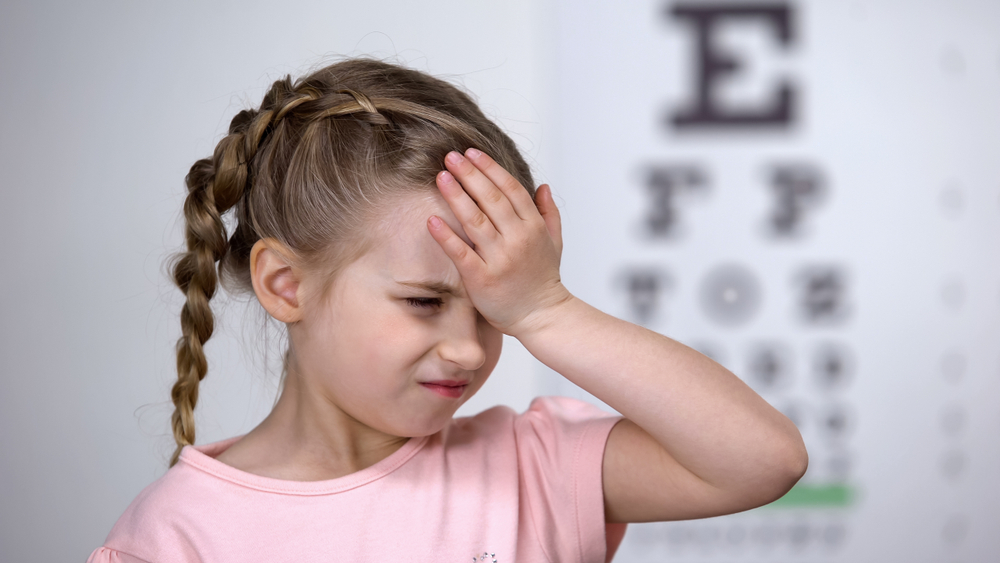
What Are the Signs My Child Has a Vision Problem?
Your child may not always know how to explain blurry vision, eye strain, or trouble focusing. That is why parents often notice the first clues through behavior: squinting at the TV, avoiding books, rubbing the eyes, or getting frustrated with close-up tasks. Understanding the signs of vision problems in children can help you know when to schedule an eye exam and when to seek care sooner.


What are the most common signs my child may have a vision problem?
The most common child vision problems signs are changes in how your child looks, learns, plays, or reacts during visual tasks. Some signs are obvious, like crossed eyes or holding a tablet very close. Others are easy to mistake for boredom, tiredness, or trouble paying attention, especially when your child is too young to describe what they see.
Watch for these possible signs of eye strain or child eye problems:
- Squinting or closing one eye when looking across the room, reading, or watching a screen.
- Frequent eye rubbing, especially when your child is not sleepy.
- Headaches, eye pain, or tired eyes after reading, homework, drawing, or screen time.
- Holding books, toys, or devices very close or sitting unusually close to the TV.
- Tilting the head or turning the face to see better.
- Covering one eye during near work or outdoor play.
- Losing their place while reading, skipping words, or using a finger to track lines.
- Avoiding puzzles, coloring, books, or homework that requires sustained near focus.
- Short attention span during visual tasks, even when your child can focus well during listening or active play.
- Eyes that appear misaligned, drift outward, or cross regularly.
These symptoms can be linked with several common conditions, including nearsightedness, farsightedness, astigmatism, amblyopia, strabismus, or convergence insufficiency. Refractive errors can blur vision, while amblyopia affects how vision develops in one eye, and strabismus involves eye alignment. Convergence insufficiency can make close work uncomfortable because the eyes have difficulty working together at near distances. (aapos.org)
How do warning signs change by age?
Warning signs of vision problems in infants and children look different because children’s visual skills develop over time. A baby cannot tell you an object looks blurry, and a preschooler may assume everyone sees the way they do. School-age children may complain more directly, but they may also hide the problem because they feel embarrassed or do not want to wear glasses.
Infants
In young babies, occasional brief eye crossing can happen as the eyes learn to coordinate. However, parents should pay attention if a baby does not seem to follow moving toys by about 3 months, if one or both eyes turn in or drift out regularly after about 4 months, or if the eyes do not seem to move together. These are among the important warning signs of vision problems in infants children may show before they can communicate. (healthychildren.org)
Other infant signs can include unusual eye movement, constant tearing, extreme light sensitivity, or a white-looking pupil in photos or normal light. If something about your baby’s eyes seems persistent or unusual, it is better to ask than to wait and hope it disappears.
Toddlers and preschoolers
Signs of vision problems in young children often show up during play. Your child may bump into objects, struggle to stack blocks, avoid coloring, or bring toys very close to their face. You may also notice frequent blinking, rubbing, head tilting, or frustration when looking at picture books.
Preschoolers may not say, “I can’t see.” Instead, they may say their head hurts, their eyes feel tired, or they do not like books. Some children become clingy in unfamiliar places because they cannot clearly see steps, faces, or objects around them.
School-age children
Once your child starts school, child eye problems can affect reading, writing, sports, and confidence. A child may copy incorrectly from the board, read slowly, avoid homework, or lose interest in activities that used to be fun. Some children are labeled inattentive when the real issue is that their eyes are working too hard.
If your child complains that words move, blur, or double, or if reading causes headaches, an eye exam for children is a practical next step. A school vision screening can be helpful, but it is not the same as a comprehensive eye exam that checks focusing, eye teaming, eye health, and whether glasses are needed.
Subtle clues parents often overlook
Some of the most useful clues happen during ordinary routines. Notice how your child behaves after 10 to 20 minutes of reading, drawing, building with small toys, or using a device. If they start strong but quickly become irritable, distracted, or physically uncomfortable, vision may be part of the picture.
You can also compare near and distance tasks. Does your child love listening to stories but avoid looking at the page? Do they enjoy playground play but struggle with ball games? Do they perform better when instructions are spoken rather than written? These patterns do not prove a vision problem, but they can help you describe what you are seeing when you call an eye care professional.
A simple parent observation checklist can help:
- Write down when symptoms happen: reading, screens, sports, evening routines, or bright light.
- Note whether one eye seems to turn, drift, water, or close more often.
- Ask your child open questions such as, “What happens to the words when you read?”
- Track complaints of headaches, eye pain, nausea, or fatigue.
- Bring your notes to the appointment so the provider can understand the pattern.
Untreated vision issues can affect more than eyesight
Kids eye health matters because vision is tied to learning, movement, social confidence, and daily independence. When a child cannot see clearly or comfortably, reading may feel exhausting, sports may feel discouraging, and classroom tasks may take more effort than they should. Over time, a child may begin avoiding activities that make them feel unsuccessful.
Some children with untreated vision problems may seem restless or resistant, not because they are unwilling, but because the task is visually uncomfortable. Others may become quiet and withdrawn. Early attention gives your child a better chance to see clearly, build skills, and participate with confidence.
The right next step is a professional eye exam
If you notice repeated signs of vision problems in children, schedule a comprehensive eye exam rather than relying only on home observation. Parents in Spearfish and surrounding communities can start by contacting a local optometrist, pediatric eye care provider, or their child’s primary care office for guidance. If your child has sudden vision loss, eye injury, severe eye pain, a new eye turn, or a white pupil appearance, seek urgent medical advice.
Before the visit, gather helpful details: your child’s symptoms, family history of glasses or lazy eye, school concerns, screen habits, and any previous screening results. During the exam, the provider may check visual clarity, focusing, eye alignment, depth perception, and overall eye health. A comprehensive pediatric eye and vision exam may include history, visual acuity, refractive status, binocular vision, eye movement, and ocular health assessment. (aoa.org)
A calm, observant parent makes a big difference
You do not need to diagnose your child’s eyes at home. Your job is to notice patterns, trust your instincts, and act when something keeps showing up. Squinting, eye rubbing, headaches, close viewing, reading avoidance, or misaligned eyes are all reasonable reasons to ask about an eye exam children can receive from a qualified professional.
The earlier child eye problems are identified, the sooner your child can get support that fits their needs. Clear, comfortable vision can make reading, play, school, and everyday discovery feel easier—and that is worth paying attention to.